I'm a Ph.D. student in Information Science at Cornell Tech, advised by Prof. Thijs Roumen. I research interactive design tools that help people reason about decisions while designing and fabricating physical objects.
My work spans CAD, digital fabrication, human–AI interaction, and interdisciplinary collaboration. I build tools for exploring alternatives, expressing uncertainty, and reflecting on design consequences.
Previously, I studied Matter Design Computation at Cornell University and architecture at SCI-Arc.
News
Updates & milestones
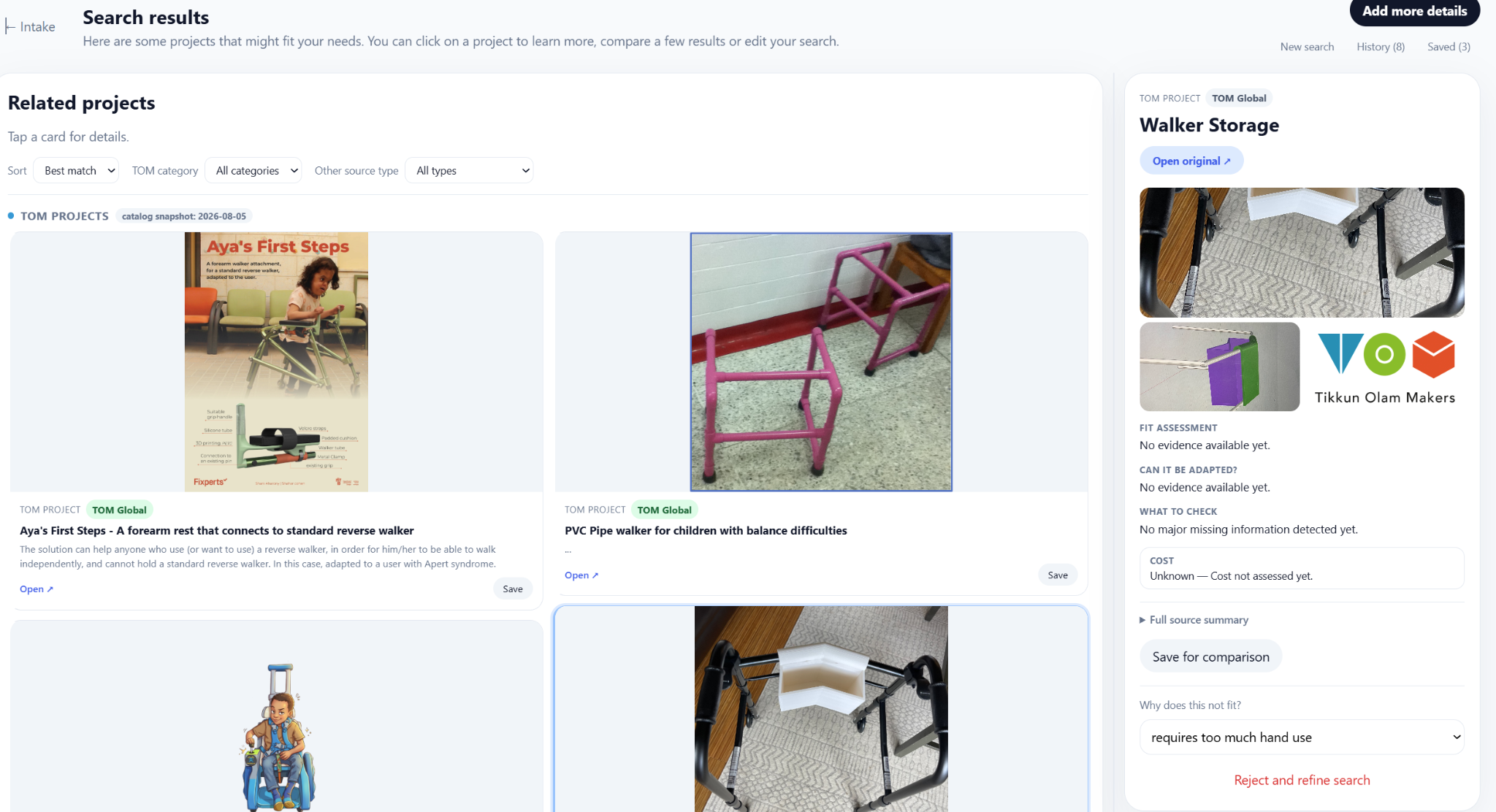
Siegel PiTech PhD Impact Fellow with TOM Global. Built a multi-source assistive technology search tool. Project details ↗
CAMeleon was accepted to ACM CHI 2026; I attended and presented the work in Barcelona, April 13–17.
Shuo Feng, Xuening Wang, Yifan (Lavenda) Shan, Krista U Singh, Bo Liu, Amritansh Kwatra, Ritik Batra, Tobias M Weinberg, Thijs Roumen
Designers often make early assumptions about materials and fabrication workflows, making it difficult to change direction once a CAD model is built around them. CAMeleon lets designers interactively compare fabrication workflows at different stages of modeling, making their implications and trade-offs visible before committing to a direction.
People seeking assistive technology often describe everyday challenges without knowing the technical names of relevant solutions. Developed with TOM Global, this tool connects conversational intake to searches across assistive technology catalogs, open-source designs, and commercial products. It helps staff assess whether a result can be used as-is, adapted, or turned into a new maker challenge when existing solutions do not fit.
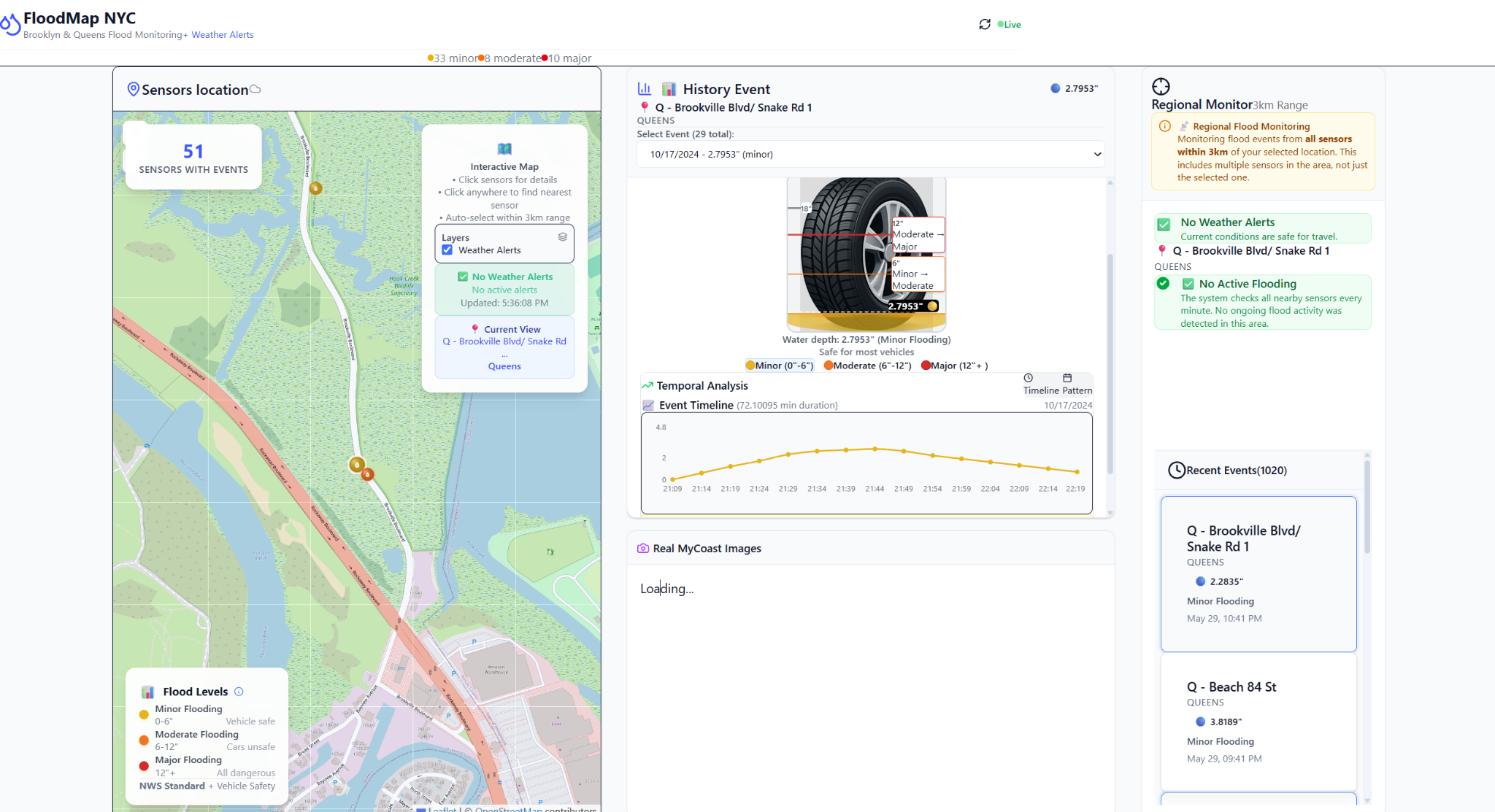
Developed with the NYC Mayor's Office of Climate & Environmental Justice, this interactive dashboard presents flood sensor readings, historical events, and localized monitoring information in an accessible format. It helps New York City residents explore flood-related data and better understand conditions relevant to their neighborhoods.
Data visualizationFlood preparednessCivic technology
Shuo Feng, Bo Liu, Yifan (Lavenda) Shan, Roy Zunder, Wei-Che Lin, Tri Dinh, Harald Haraldsson, Ofer Berman, Thijs Roumen
Y-AR is a mixed-reality CAD tool for creating three-dimensional wire structures that connect to objects in the physical environment. Its interface incorporates springs as design primitives, both to apply forces that hold objects and to accommodate dimensional inaccuracies from mid-air modeling and measurement.
Zekun Chang, Yixuan Gao, Yuta Noma, Shuo Feng, Xinyi Yang, Kazuhiro Shinoda, Tung D Ta, Koji Yatani, Tomoyuki Yokota, Takao Someya, Tomohiro Tachi, Yoshihiro Kawahara, Koya Narumi, Francois Guimbretiere, Thijs Roumen
OriStitch transforms existing flat fabrics into self-folding three-dimensional structures through computational embroidery. Functional threads are stitched in specific patterns and then activated with heat to achieve a target form. The workflow works with a range of materials, including leather, woven fabric, and denim.
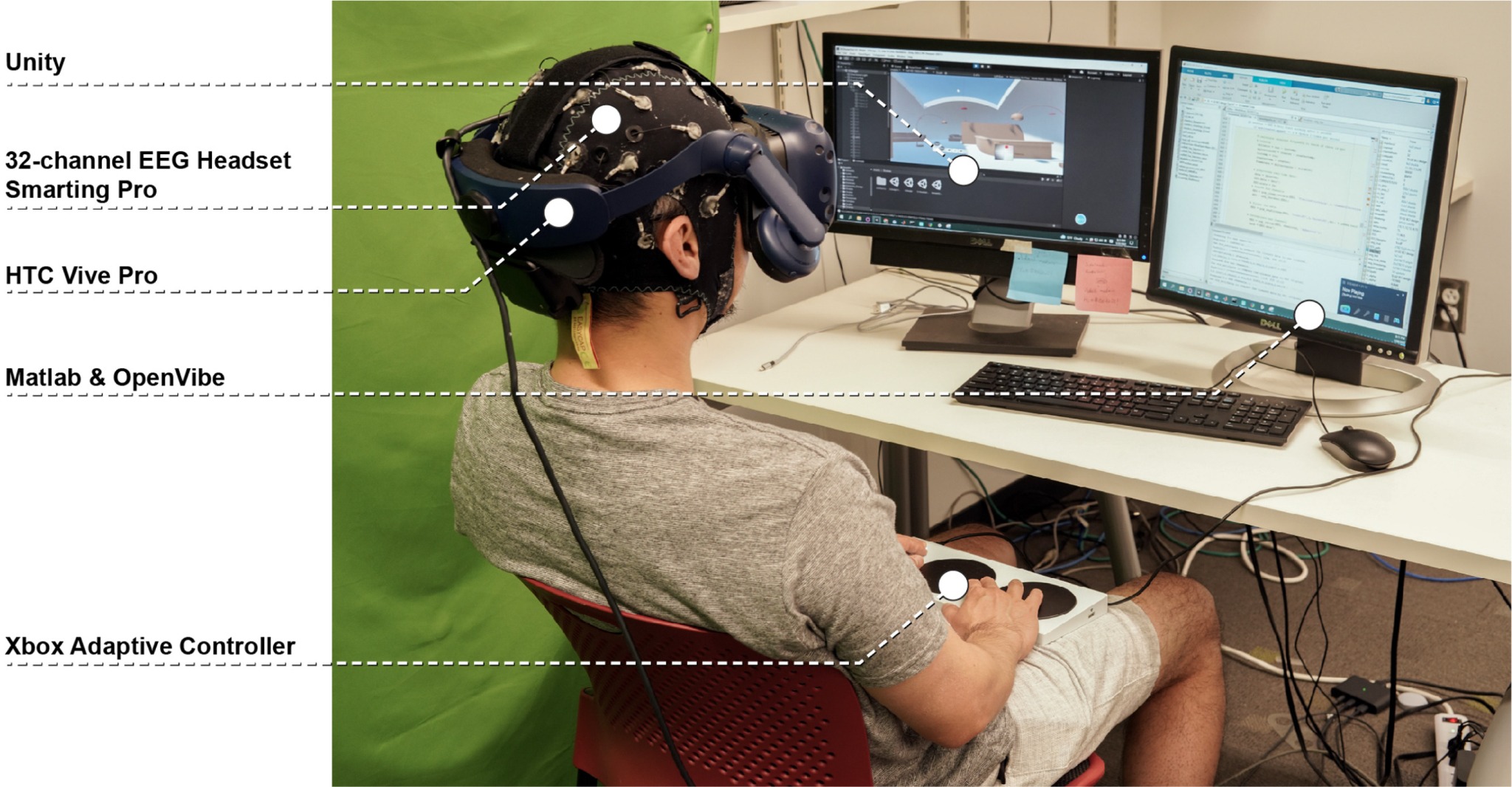
Multi-Self is a BCI–VR design tool that provides real-time visual feedback about designers' emotional responses to support metacognitive monitoring. A pilot study with 24 participants reported increased design exploration and self-awareness, while responses to the accuracy of the emotional feedback were mixed.
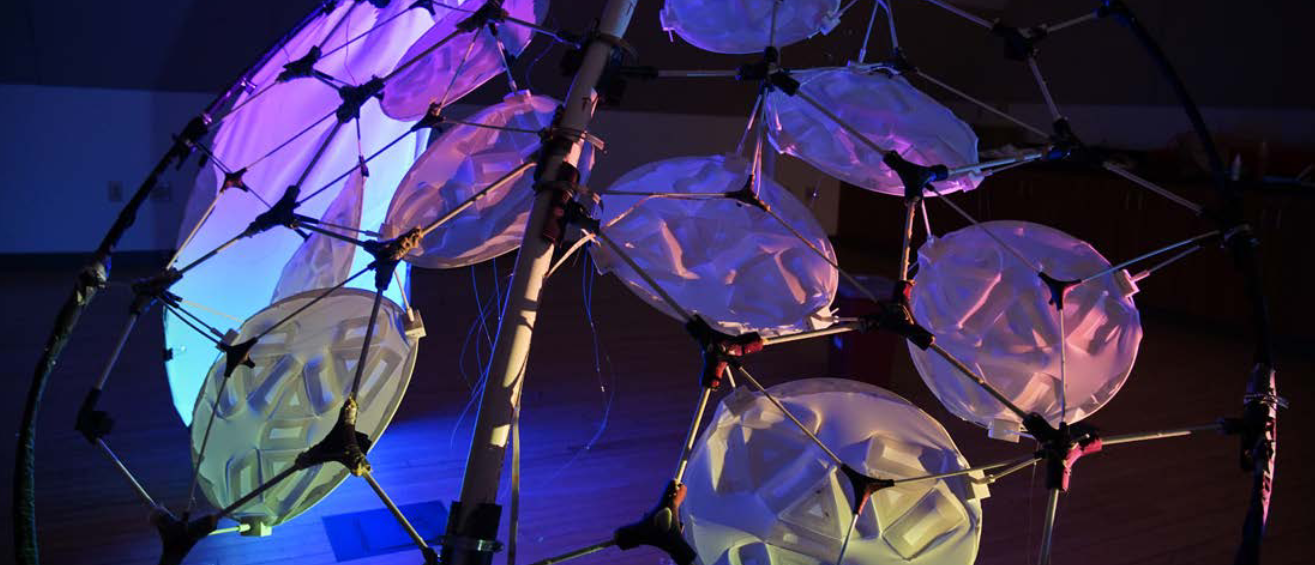
Emotive Room explores how an interactive architectural environment can respond to people's emotional states through real-time brain–computer interaction. By changing spatial color and form in response to stress-related feedback, the project investigates responsive environments that may support calmness and well-being.